

Guest Experience Starts at the Front Door
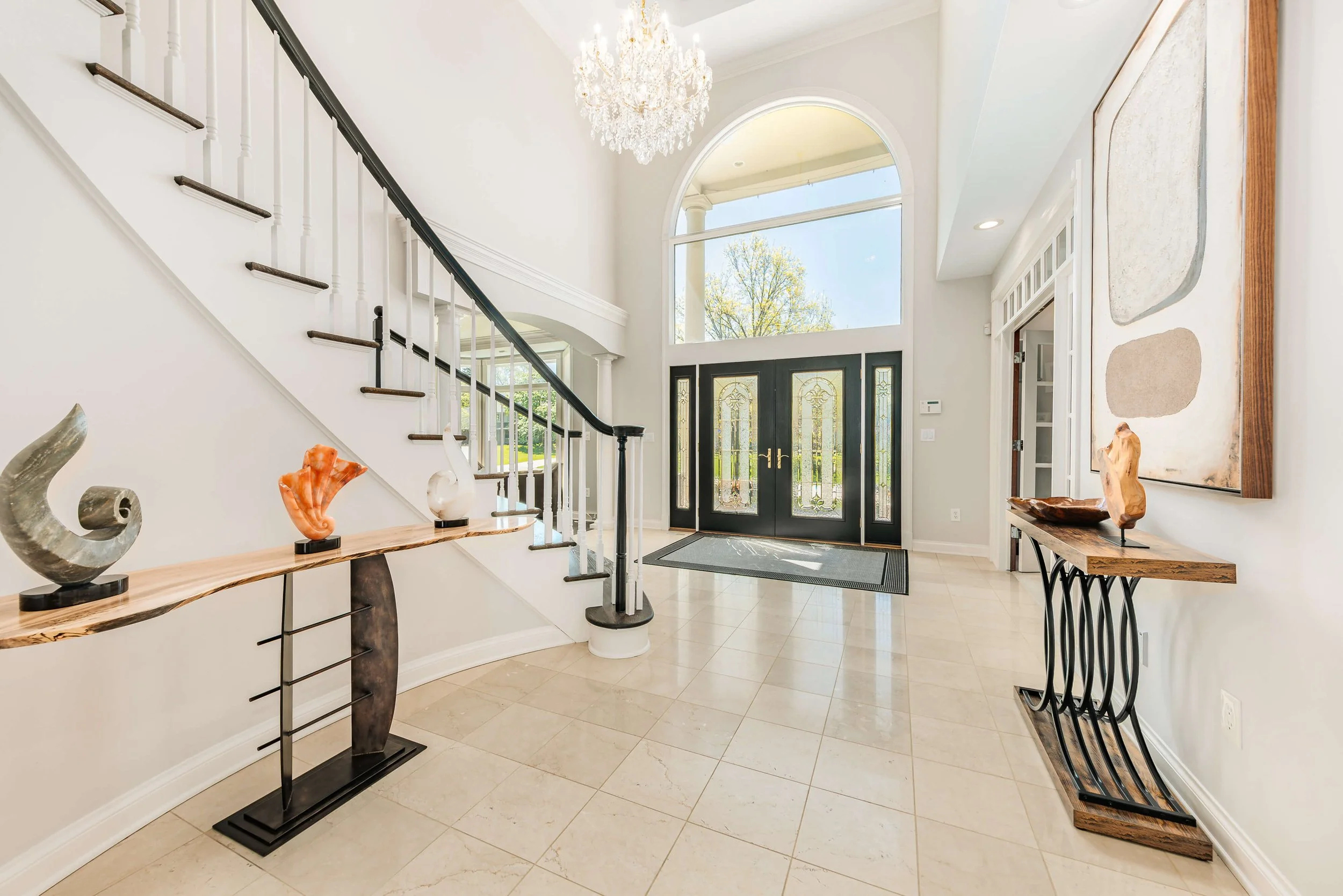
When we talk about hospitality in interior design, attention often goes to the spaces where people typically gather: the kitchen, dining, and living spaces. But the experience of being welcomed into a home begins much earlier.
It begins at the front door.
The transition from outside to inside establishes an immediate sense of how a home feels and how it wants to be experienced. Entry sequences, lighting, circulation, scale, and even where someone instinctively pauses all contribute to that first impression.
A well-considered entrance does not need to be grand. It needs to make people feel oriented, comfortable, and welcomed.
Key Takeaways
A thoughtfully designed entryway sets the tone for how the rest of the home is experienced.
Successful entry spaces balance visual impact with the practical needs of daily life and entertaining.
Lighting, circulation, and sightlines work together to guide guests naturally from one space to another.
Hospitality-minded design anticipates small needs that make both guests and homeowners feel more comfortable.
Planning for everyday living and entertaining together creates a home that adapts easily to different occasions.
Designing a Welcoming Home Starts With the Arrival Experience
Hospitality design pays close attention to arrival because the first few moments shape what follows.
A boutique hotel does not begin at the guest room. The experience starts as someone approaches the property, enters the lobby, understands where to go, and begins to settle into the environment.
Residential interior design benefits from the same thinking.
We consider what someone sees when the front door opens. Where does the eye travel? Is there a clear path forward? Is there a natural place to pause? Does the entry reveal the entire home immediately, or does it allow the architecture to unfold gradually?
These decisions create an arrival sequence rather than simply an entryway.
Entryway Design is About More Than First Impressions
A beautiful entry can make an immediate visual impression, but appearance is only one part of its responsibility. An entry also has to work.
There may need to be a place to set down a bag, remove a coat, greet guests, or transition between outdoors and the more private areas of the home. Circulation needs to remain clear even when several people arrive at once.
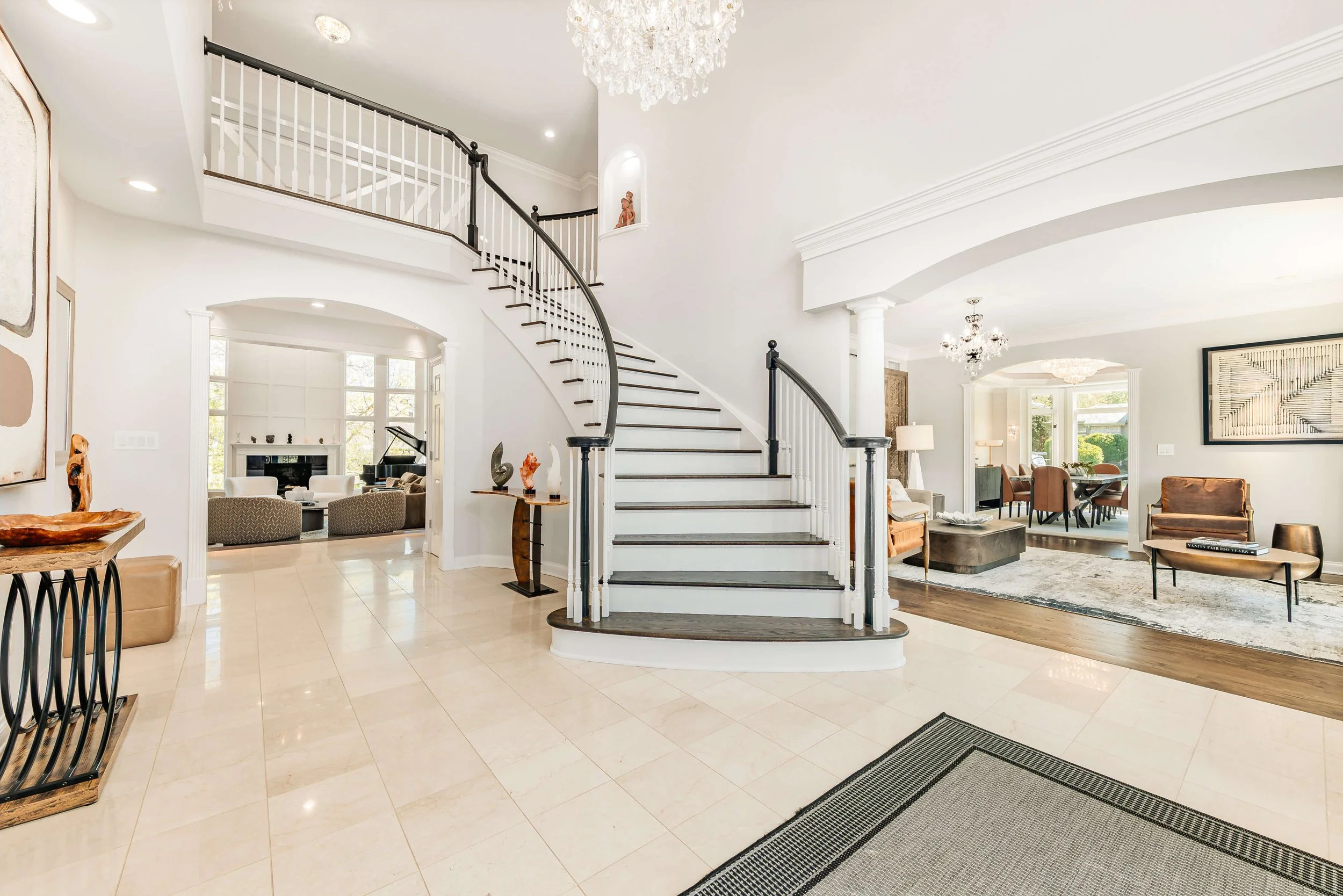
The best entryway design resolves these practical requirements without making them feel overly managed.
This is where proportion and space planning become particularly important. A console that is too deep can interrupt circulation. Furniture placed only for visual symmetry may make movement awkward. Even a beautifully designed foyer can feel uncomfortable when the scale is wrong.
Good hospitality often feels effortless because the planning behind it is nearly invisible.
How Lighting Shapes the Guest Experience at Home
Lighting plays an important role in communicating arrival. Bright, uniform illumination can make an entry feel exposed or purely functional. Layered lighting creates a different experience.
Architectural lighting may establish the overall environment, while sconces, lamps, pendants, or other decorative fixtures introduce warmth and a more human scale. Natural light also changes the way an entrance is experienced throughout the day.
The goal is not simply to make the foyer brighter. It is to create a transition.
Coming through the front door should feel different from standing outside. Thoughtful lighting helps establish that shift and begins setting the atmosphere for the spaces beyond.
Interior Design for Hosting Considers How Guests Move Through a Home
Once someone enters, the experience continues through circulation. The relationship between the entry, living areas, kitchen, powder room, and outdoor spaces should feel intuitive.
This does not mean every space needs to be immediately visible. In fact, revealing a home gradually can make the experience richer. Sightlines can frame artwork, architecture, landscape, or another destination and naturally draw someone forward.
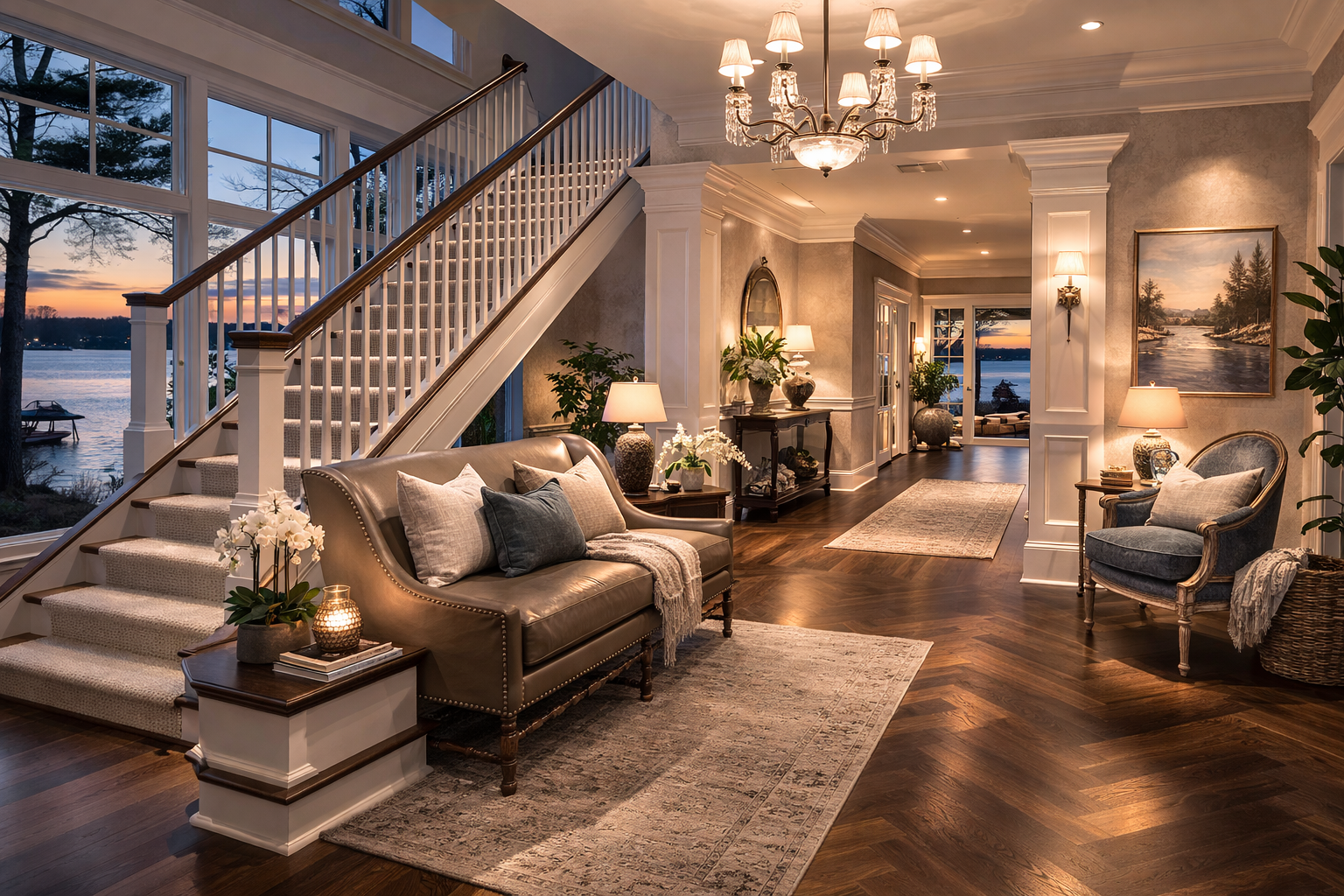
These transitional moments do a great deal of invisible work. A hallway, threshold, stair, or opening between rooms may not be where people spend the most time, but each one influences how easily they move through and experience the home.
Hospitality-Inspired Design Can Be Found in Small Details
Hosting well is not necessarily about creating larger entertaining spaces or adding more amenities. Often, it comes down to anticipating needs.
Where will coats go when several people arrive at once? Is there a convenient powder room for guests? Can someone move from the kitchen to an outdoor entertaining area without interrupting another activity? Is there somewhere to place a drink while greeting someone at the door?
These may seem like small considerations, but together they shape how comfortable a home feels. Hospitality thinking asks us to look beyond individual rooms and consider the complete experience of being there.
Designing for Hosting and Living
Many of the decisions that make a home more welcoming for visitors also make it function better every day. Clear circulation, thoughtful storage, layered lighting, and well-planned transitions allow daily life to unfold more naturally throughout the home.
Designing for hosting is therefore not separate from designing for living. When both are considered together, a home can support a quiet Tuesday evening just as naturally as it supports a house full of people.
FAQs About Designing a Home for Guest Experience
What should be considered when designing an entryway for guest experience?
Beyond aesthetics, consider what happens when guests arrive. Adequate coat storage, comfortable clearance around the door, durable flooring, convenient surfaces for personal belongings, and proximity to gathering spaces can make arrivals and departures feel much more natural.
Does a home need a large foyer to create a welcoming entrance?
No. A successful entrance is more dependent on proportion and intention than square footage. Even a compact entry can feel considered through appropriate furniture scale, lighting, artwork, material choices, and a clearly defined transition into the rest of the home.
What materials work best in high-traffic entryways?
Materials should be selected according to the home's location, climate, and lifestyle. Flooring, rugs, wall finishes, and furnishings near an entrance often need to tolerate moisture, dirt, frequent movement, and seasonal changes while still supporting the design language of the rest of the home.
How can you plan a home for both everyday living and entertaining?
Rather than creating spaces that only function well for special occasions, look for solutions that serve both. Flexible seating, integrated storage, adaptable lighting, and well-planned circulation can allow rooms to transition easily between daily routines and larger gatherings.
When should guest experience be considered during a new build or renovation?
Ideally, it should be considered during the early planning stages. Decisions about door placement, room relationships, circulation, lighting, storage, and sightlines are easier to resolve before construction is underway and can influence the architectural plan itself.
How can hospitality design principles be used in residential interior design?
Residential design can borrow hospitality principles such as anticipating people's needs, creating intuitive transitions, considering acoustics and lighting, and providing different levels of comfort and privacy. The objective is not to make a residence feel like a hotel, but to apply the same attention to how people experience a space.
Creating a Home That Welcomes People from the Moment They Arrive
Guest experience does not begin when everyone sits down for dinner. It starts with the approach to the home, the opening of the front door, and the first few moments inside.
At Pedro Lima Interiors, we design high-end residential and boutique hospitality environments with careful consideration for how people arrive, gather, and move through a space.
If you're planning a new home or renovation and want to create an environment that supports both everyday living and meaningful hospitality, book a Discovery Call to start the conversation.
